
I was in graduate school in Los Angeles, a city with a sizeable Latino/a population when I heard the news that the Cuban government had shot down two aircraft killing four U.S. nationals. These Cubans reportedly comprised a humanitarian group called Brothers to the Rescue, an organization that canvassed the waters off the coast of Florida seeking to aid and assist Cuban migrants using make-shift rafts and other flimsy vessels to flee to America. A third airplane evaded attack that day and made it safely back to Miami. That was on February 24,1996.
On a campus as diverse as the University of Southern California, conversations about this development forced professors in some classes – especially political science, public policy, international relations and comparative politics – to put aside their lesson plans, at least for part of their classes and allow space for discussion of this news story. Cuban officials claimed the pilots violated Cuban airspace, while the International Civil Aviation Organization argued differently, maintaining that the airplanes were shot down in international air space.
Many Cuban Americans denounced the shooting, resulting in Congress codifying the American embargo against Cuba, setting in stone sanctions that remain in place to this day.
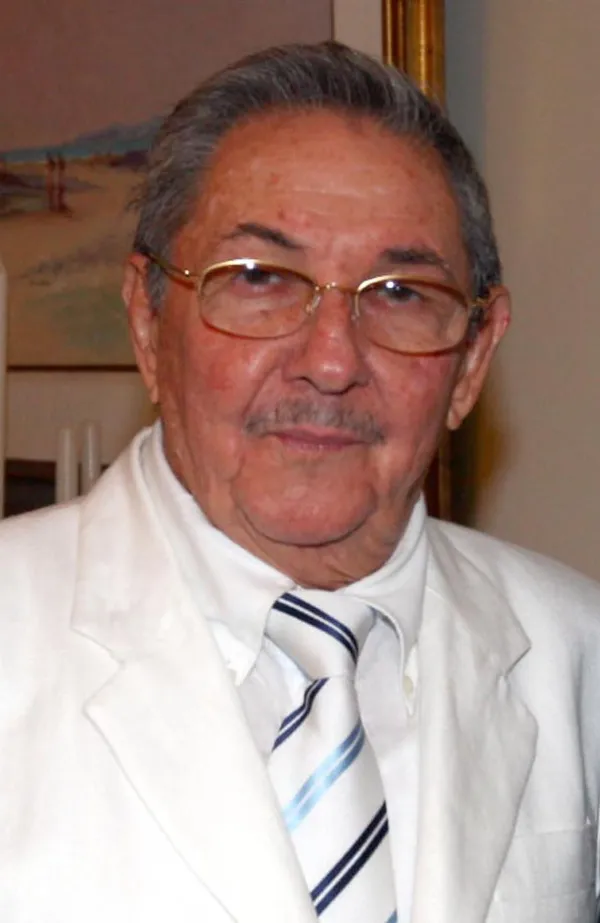
According to acting U.S. Attorney General Todd Blanche, 94-year-old Raul Castro and other senior officials both in the government and the country’s military are now charged with conspiracy to kill U.S. nationals, destruction of property (airplanes) and four separate counts of murder. Cuban President Miguel Diaz-Canel scoffs at the indictment believing it has no basis in law. What’s more he charged the U.S. with spinning yarns to justify its meddling in the affairs of other countries. Diaz-Canel called Brothers to the Rescue a “narco-terrorist” group.
Presumably, a warrant has been issued for Castro’s arrest. How the government plans to effect this arrest is anybody’s guess. Relations between the U.S. and Cuba have been frigid (to put it mildly) ever since Fidel, Che Guevara, Raul and their band of brothers launched a revolution that kicked Fulgencio Batista and his minions out of power in 1959 making the Cuban revolution the first successful revolution in the Western Hemisphere since the Mexican revolution of the early 20th century.
Cuba has formal extradition arrangements with several countries, but the United States is not one of them. It is possible that the U.S. feels emboldened to pursue the kind of clandestine operation that resulted in apprehending Venezuelan leader Nicolas Maduro four months ago. When acting Attorney General Blanche was peppered with questions regarding how the Castro situation might be handled, he was cryptic in his answer, suggesting perhaps Castro might show up in America on his own accord and go to prison.
There is little doubt that this recent move is part of a chess game with far-reaching implications. Recent meetings between the CIA Director and Cuba’s head of intelligence, and other officials don’t happen very often. There is a play to be made here on the part of the United States government that is sure to have geopolitical ramifications not only in the west but other regions of the world. What exactly that play is, only time will tell.
Judson L. Jeffries, PhD, MPH, is Professor of African American and African Studies at The Ohio State University.